
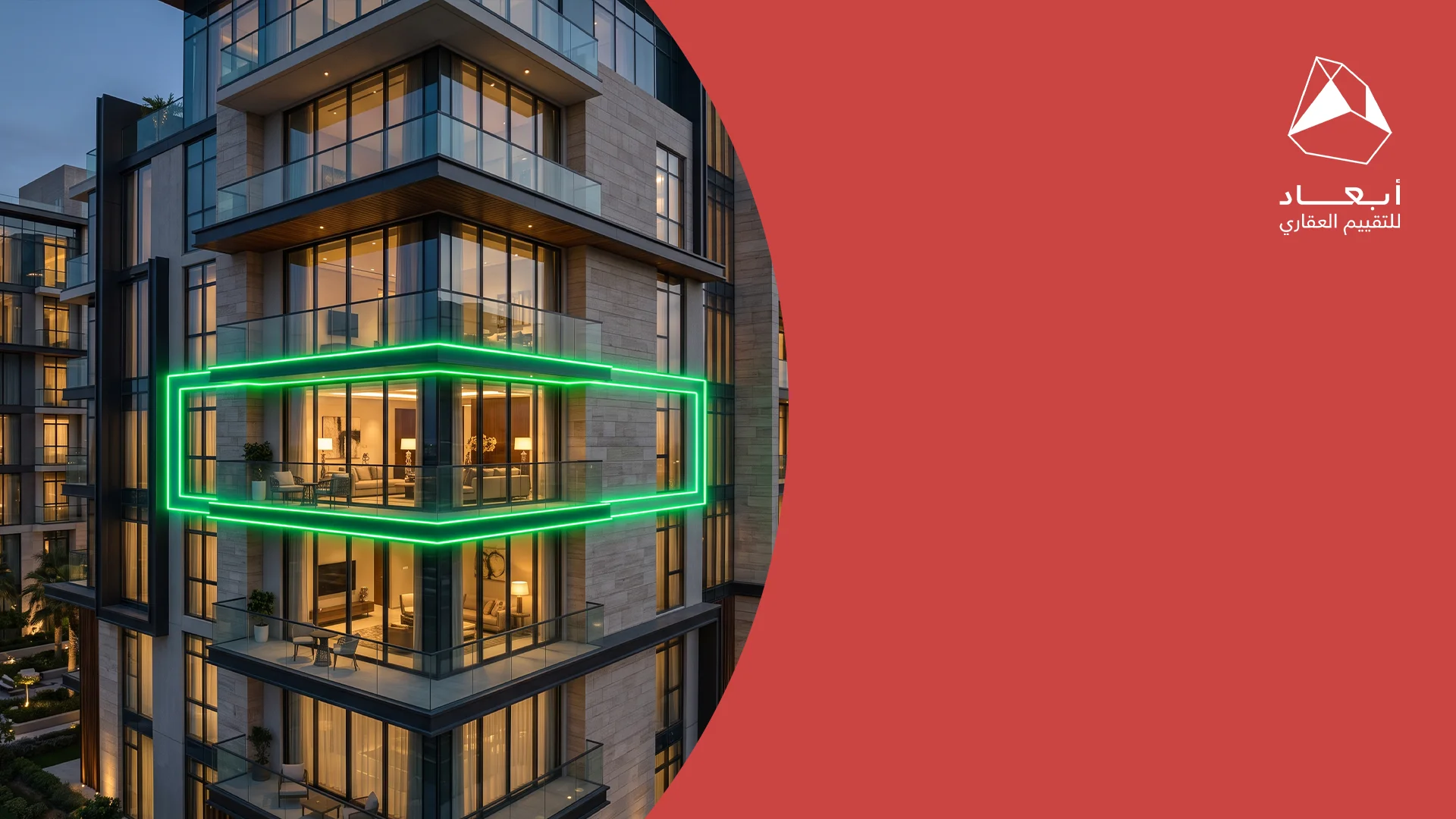
Residential apartments are among the most in-demand real estate assets in Saudi Arabia, serving both individuals seeking suitable housing and investors looking for sustainable rental returns.
Valuing residential apartments requires a high level of accuracy, as it is not limited to the unit’s size alone. It extends to evaluating technical aspects, structural condition, location within the residential building, and surrounding services to ensure a fair valuation that reflects the property’s true market value.
What Is Residential Apartment Valuation?
Residential apartment valuation is a professional process aimed at determining the fair market value of a residential unit at a specific date.
The process follows approved valuation methodologies based on the standards of the Saudi Authority for Accredited Valuers (TAQEEM), considering the apartment’s technical specifications, location, shared building facilities, and supply and demand indicators in the surrounding area.
The result is a reliable and professional valuation report that reflects the apartment’s market position.
Why Is Apartment Valuation Necessary?
Whether you are planning to purchase, sell, or rent an apartment, an accredited valuation provides financial clarity and protection through:
- Ensuring a fair price: Avoiding overpayment when purchasing or selling below the actual market value.
- Real estate financing: Banks often require a valuation report from an accredited valuer before approving mortgage financing.
- Transparent inheritance distribution: Supporting fair allocation of residential units among heirs.
- Investment asset management: Helping investors understand expected returns and compare the apartment with other investment opportunities.
Factors Affecting Residential Apartment Value
The market value of a residential apartment is determined by several interconnected factors that collectively shape the final fair value of the unit.
Location
Location is one of the most influential factors affecting apartment value. The price varies depending on the city, neighborhood, access to essential services such as schools and hospitals, availability of transportation, and proximity to major roads and key destinations.
Apartment Size and Layout
The apartment’s size directly influences its market value. The valuation considers both the net usable area and the total area of the unit.
Other factors include the efficiency of room distribution, number of bedrooms and bathrooms, and how effectively the available space is utilized.
Apartment Position Within the Building
The apartment’s location within the building significantly affects its value. Factors such as floor level, views, natural lighting, ventilation, and elevator availability influence buyer demand.
The number of apartments per floor and the level of privacy provided by the unit are also considered during valuation.
Construction Quality and Finishes
The building structure and interior finishes have a direct impact on apartment value.
The valuation considers building age, construction quality, maintenance history, and the condition of internal finishes and shared facilities, as poorly maintained buildings generally experience lower market demand.
Shared Facilities and Services
Shared facilities add additional value to residential apartments, including:
- Dedicated parking spaces.
- Elevators.
- Security systems.
- Gardens and outdoor areas.
- Shared recreational facilities.
The quality of building management through the owners’ association also affects value, as effective management indicates better maintenance and long-term stability.
Legal and Regulatory Compliance
Apartment value is also influenced by legal and regulatory factors, including:
- Ownership documents.
- Building permits.
- Building completion certificates.
- Compliance with municipal requirements.
- Shared ownership regulations governing relationships between unit owners.
Real Estate Market Conditions
Apartment values are affected by overall market conditions, including supply and demand levels, recent comparable transactions, real estate trends, urban growth, and infrastructure development in the area.
How Is Residential Apartment Valuation Conducted?
Professional apartment valuation follows a structured process that begins with data collection and ends with preparing a detailed valuation report.
The process includes:
- Data collection: Gathering information about the apartment, building, location, area, construction age, and surrounding neighborhood.
- Document review: Reviewing ownership documents, building permits, and completion certificates to verify the legal status of the unit.
- Site inspection: Visiting the apartment and building to assess condition, finishes, views, ventilation, and shared facilities.
- Apartment analysis: Evaluating the unit’s area, layout, number of rooms, bathrooms, and privacy level.
- Market analysis: Studying recent comparable apartment transactions and analyzing supply and demand indicators.
- Selecting the valuation approach: Choosing the most suitable methodology based on the apartment type, valuation purpose, and available data.
- Determining market value: Applying the selected approach and documenting adjustments and assumptions.
- Preparing the valuation report: Issuing a professional report including the apartment description, valuation methodology, influencing factors, and final value.
Documents Required for Apartment Valuation
To complete the valuation process accurately and efficiently, the following documents are recommended:
- Updated electronic ownership deed.
- Building permit.
- Apartment layout plan showing its location within the floor.
- Current lease agreements (if the apartment is rented).
- Details of associated facilities such as private parking, storage rooms, or additional spaces.
How to Choose a Residential Apartment Valuation Company?
Choosing the right valuation partner ensures obtaining an accurate and fair assessment. Important criteria include:
- Accreditation by the Saudi Authority for Accredited Valuers (TAQEEM): Ensuring compliance with professional standards and regulations.
- Experience in residential apartment valuation: Verifying experience with similar residential assets.
- Local market knowledge: Understanding real estate conditions and price factors in the property’s area.
- Commitment to international valuation standards (IVS): Applying recognized professional practices.
- Clear valuation reports: Providing detailed and well-supported reports.
- Accuracy and timely delivery: Ensuring reliable results within an appropriate timeframe.
Do you own a residential apartment and want to know its current market value? Contact Abaad valuation experts to receive professional valuation services based on internationally recognized standards.
Frequently Asked Questions About Residential Apartment Valuation
What is residential apartment valuation?
It is a professional process used to determine the fair market value of a residential unit at a specific date based on technical specifications, location analysis, and market indicators.
How are residential apartments valued?
The process includes collecting data, reviewing documents, conducting site inspections, analyzing apartment specifications, studying the market, selecting the appropriate valuation methodology, calculating market value, and preparing the final report.
What factors affect apartment value?
Key factors include location, apartment size, floor level, construction quality, finishes, shared facilities, legal compliance, and overall market supply and demand.
What is the difference between apartment valuation and villa valuation?
Villa valuation focuses mainly on land ownership, private spaces, and building characteristics, while apartment valuation considers the unit area, shared land ownership, and building facilities and services.
Does building age affect apartment value?
Yes. Older buildings may require higher maintenance costs and may have outdated facilities, which can reduce market value compared with newer residential buildings.
Does apartment value differ depending on the floor?
Yes. Higher-floor apartments may have better views, privacy, and natural lighting, while ground-floor units may be preferred due to easier access or private outdoor spaces.