
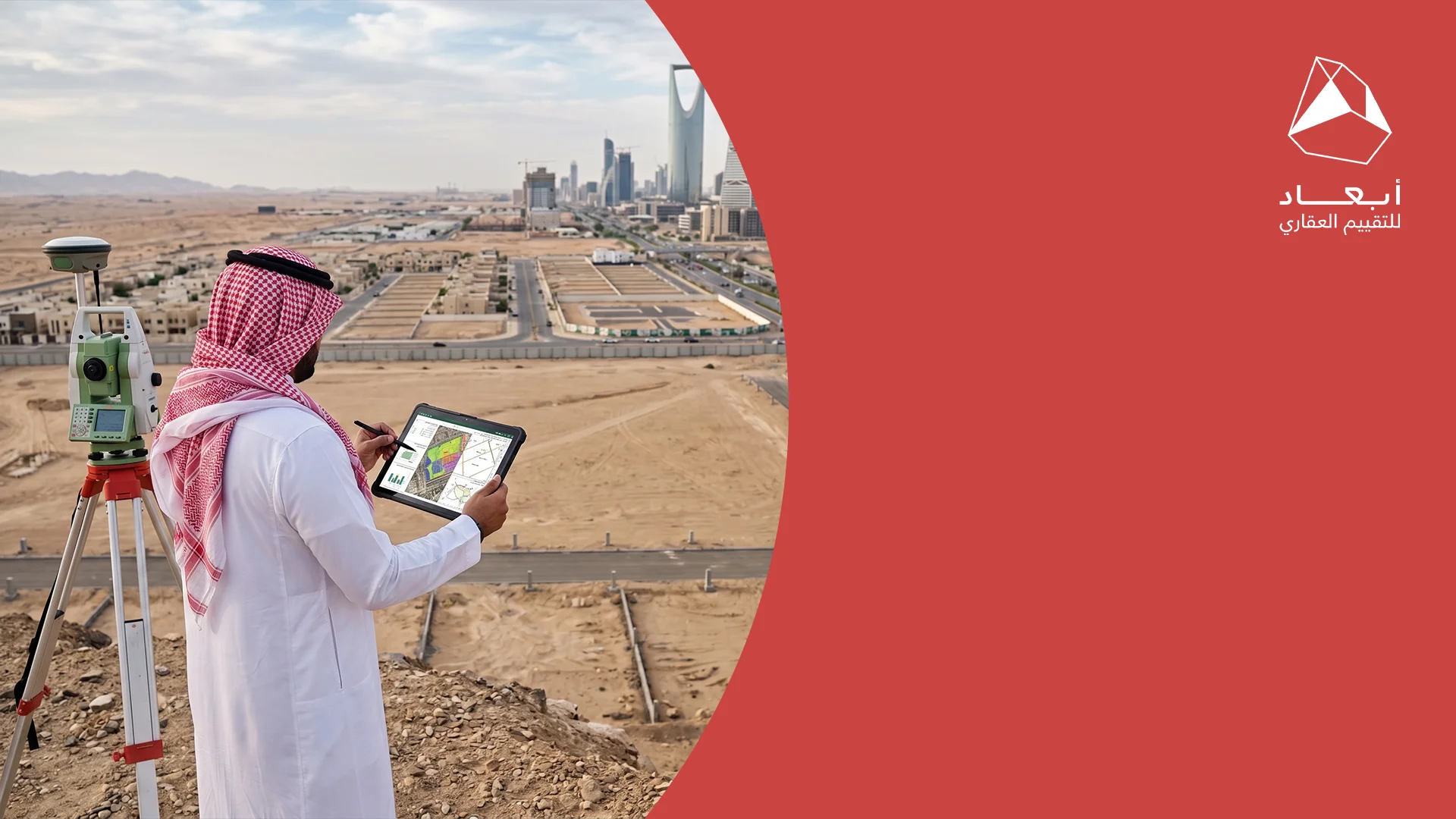
The Saudi real estate market is experiencing rapid changes driven by major economic transformations and large-scale infrastructure projects.
This dynamic environment requires property owners, investors, and developers to have a clear understanding of how to determine the fair value of land, away from personal assumptions or unverified estimates.
Land valuation is not merely a formal procedure; it is an analytical process based on professional methodologies and regulatory standards supervised by the Saudi Authority for Accredited Valuers (Taqeem). This article explores the key factors and methods used for land valuation according to professional practices and local market requirements.
What Is Land Valuation?
Land valuation is a specialized professional process that aims to determine the fair value of a land parcel at a specific date based on a detailed analysis of market conditions, the land’s physical and legal characteristics, and approved planning regulations.
The process goes beyond estimating a price. It involves a comprehensive assessment that includes reviewing ownership documents and legal restrictions, analyzing location and surrounding services, and determining an objective value that reflects the land’s investment and legal position without personal bias.
Why Is Land Valuation Important?
Some people believe that personal price estimates are sufficient when making buying or selling decisions. However, professional land valuation plays a critical role in many important transactions, including:
- Buying and selling transactions: Ensuring fair pricing based on actual market data.
- Real estate financing: Providing accredited valuation reports required by financial institutions to determine asset value.
- Dispute resolution: Supporting legal proceedings with reliable technical valuation reports.
- Inheritance distribution: Ensuring fair division of assets among heirs based on current market value.
- Partnerships and acquisitions: Determining ownership shares and asset values during mergers or investments.
- Financial reporting: Meeting disclosure requirements for companies and organizations.
- Zakat and tax obligations: Estimating the fair value of assets when required for financial or tax purposes.
Professional valuation provides legal protection, investment clarity, and stronger negotiation confidence while reducing the risks of unfair pricing or inaccurate estimates.
Difference Between Land Valuation and Land Pricing
These two concepts are often confused, but there is a significant difference between them:
Land Pricing
Land pricing is usually based on personal expectations, the owner’s desired profit margin, or estimates from non-accredited brokers. It may be affected by urgent selling conditions or a lack of technical information, making it a subjective and non-binding estimate.
Land Valuation
Land valuation is a professional and objective process performed by an accredited valuer who follows systematic data collection, regulatory analysis, and comparison with actual documented transactions to determine a fair market value recognized by legal and financial entities.
What Factors Affect Land Valuation?
Accredited valuers consider multiple factors when determining land value. These factors can be divided into several key categories:
Geographic Location
This includes:
- The city and neighborhood.
- Proximity to essential services and public facilities.
- Accessibility and surrounding development.
Land Characteristics
These include:
- Total area.
- Shape of the land parcel.
- Number and direction of frontages.
- Terrain and soil conditions.
Regulations and Planning Requirements
Including:
- Permitted land uses.
- Municipal requirements.
- Building setbacks.
- Allowed construction heights.
Infrastructure Availability
The availability of essential services such as:
- Roads.
- Electricity networks.
- Water supply.
- Sewage systems.
Real Estate Market Conditions
These are affected by:
- Supply and demand trends.
- Similar property transactions.
- Updated real estate indicators.
Why Is Land Valuation a Complex Process?
Land valuation cannot be treated as a simple calculation based only on location and size. Professional valuers analyze various additional factors, including:
Planning and Municipal Regulations
Reviewing the permitted land use, whether residential, commercial, agricultural, or industrial, according to approved development plans.
Real Estate Regulations
Considering regulations issued by the General Authority for Real Estate to ensure transparency and market stability.
Qualitative Location Factors
The evaluation considers more than just the area, including:
- Ease of access.
- Availability of services.
- Infrastructure quality.
- Views and frontage advantages.
Regulatory Restrictions
Analyzing any legal limitations that may affect ownership rights or the ability to use and develop the property, requiring expertise in reviewing ownership documents and real estate regulations.
Professional Standards in Land Valuation
At Abaad, our land asset valuation methodology follows the International Valuation Standards (IVS) while adapting them to the Saudi market environment.
Our approach focuses on:
Market Comparison Approach
Analyzing similar land transactions that have actually occurred in the same geographical area within a specific period.
Highest and Best Use Analysis (HBU)
Evaluating the use that generates the highest possible value for the land within legal limits. This is especially important for investors and real estate developers.
Urban Growth Trend Analysis
Studying how government development projects and surrounding infrastructure may influence future land value.
How to Choose a Specialized Land Valuation Company?
Selecting the right valuation partner is essential to obtaining an accurate and reliable assessment. When choosing a real estate valuation company, consider the following:
Professional Accreditation
Ensure that the company and its valuers are licensed and accredited by the Saudi Authority for Accredited Valuers (Taqeem).
Practical Experience
Review the company’s experience in valuing assets similar to your property in terms of size, location, and nature.
Local Market Knowledge
Choose a company with a strong understanding of the real estate dynamics in your property’s area.
Commitment to Professional Standards
Ensure that the company applies the latest international valuation standards (IVS) throughout the valuation process.
Clear Valuation Reports
A professional report should provide detailed explanations of the valuation methodology and the factors supporting the final value.
Land valuation helps determine a fair value based on market data and professional standards, supporting confident financial and investment decisions.
At Abaad, we combine our extensive expertise in Saudi real estate regulations and technical valuation to provide reliable valuation solutions. Whether you are an investor seeking to expand your portfolio or a property owner looking for an accurate assessment, our team provides professional advice based on approved standards.
Do you own land and want to know its fair market value? Contact our experts at Abaad today to request a professional land valuation.
Frequently Asked Questions About Land Valuation
What is land valuation?
Land valuation is a specialized technical process used to determine the fair value of a land parcel at a specific time based on market analysis, property characteristics, and planning regulations.
Why should I choose a specialized land valuation company?
A specialized company has professional accreditation, experience with complex real estate regulations, and the ability to analyze local market conditions accurately, providing reliable valuation reports that protect your financial rights.
What is the difference between market price and real estate valuation?
Market price is the amount agreed upon between buyers and sellers based on supply and demand, while real estate valuation is a professional process that determines fair value using technical and regulatory standards.
Do I need land valuation when dividing inheritance?
Yes. A valuation performed by an accredited valuer from the Saudi Authority for Accredited Valuers (Taqeem) helps ensure fair inheritance distribution based on the current market value of assets.