
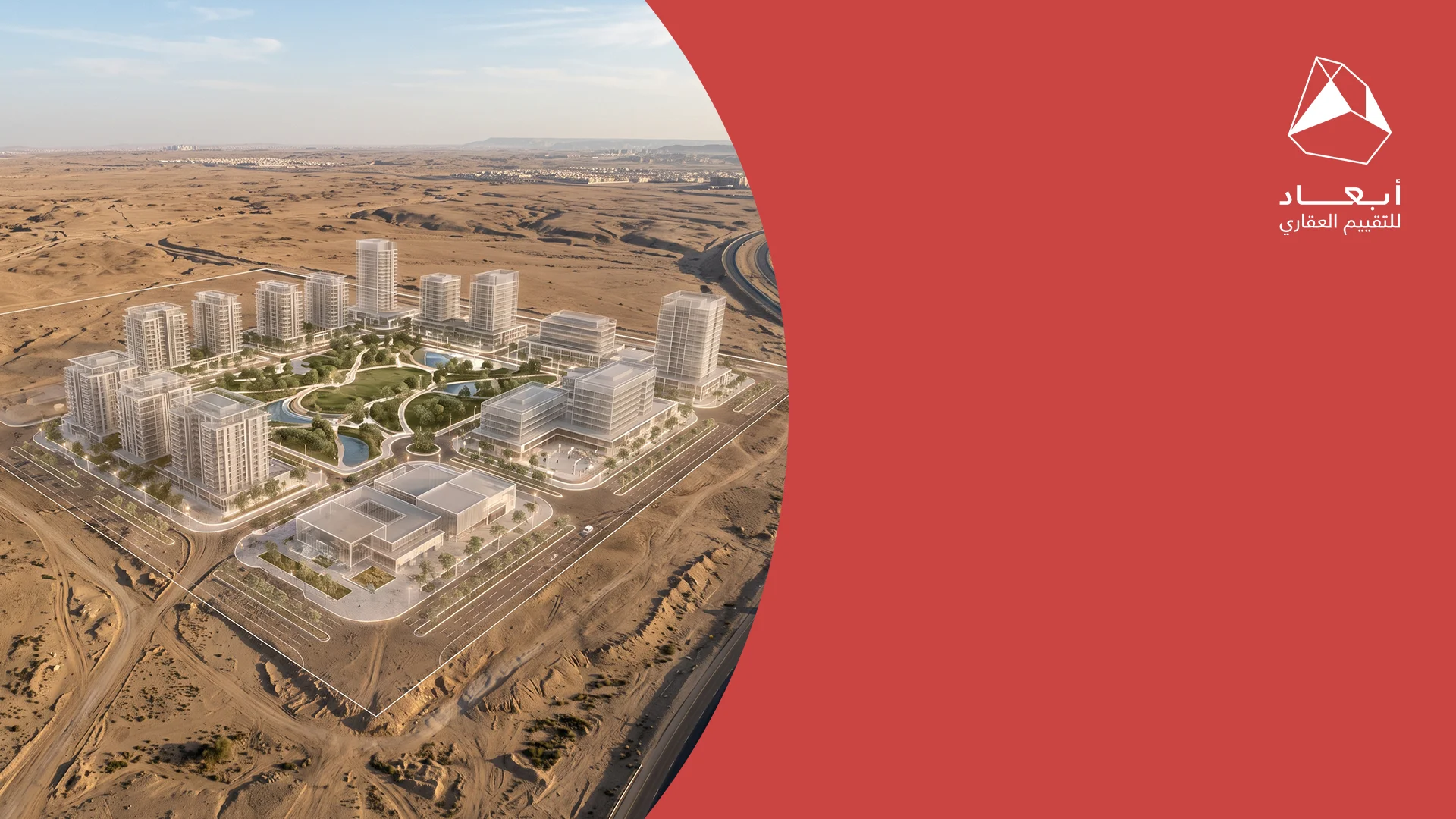
A single piece of land may be suitable for multiple development options, but choosing a different use can significantly change costs, revenues, and risks, which directly affects its value. The appropriate price for a residential project may not be suitable for a commercial or mixed-use project, even if the location remains the same.
Therefore, property valuation before real estate development helps determine the current value of the property and assess its development potential based on regulatory requirements, market data, development costs, and possible scenarios. It provides investors with a professional basis to compare alternatives and estimate the price a project can support, without replacing feasibility studies, technical inspections, or legal verification.
What Is Property Valuation Before Real Estate Development?
Property valuation before real estate development is a professional process aimed at determining the value of land or an existing property and studying its development potential before purchase, design, or construction.
The valuation may include comparing different potential uses, testing the highest and best use, and analyzing the impact of regulations, market conditions, costs, timelines, and risks on the investment opportunity.
It helps answer questions such as:
- Does the land price align with its development potential and expected project returns?
- Can the proposed project generate a suitable return?
- What value can the project support for acquiring the land?
- How do development costs affect the opportunity value?
- Is there another use that provides better feasibility?
- What uses are legally and practically possible and worth testing financially?
The report does not guarantee project success but provides professional analysis that helps investors understand the opportunity and risks before making a decision.
Why Should You Evaluate a Property Before Starting Development?
Land value is one of the most influential factors in real estate project costs. If an investor pays more than what the project revenues can support, achieving the target return may become difficult, even if the project is completed according to plan.
Property valuation before development helps to:
- Test whether the land price aligns with the value the project can support.
- Understand the property’s characteristics and development potential.
- Compare different possible uses.
- Assess the impact of regulatory requirements.
- Test expected selling and rental prices.
- Identify risks and assumptions affecting value.
- Support management and financiers in understanding the project.
- Avoid starting a design that does not match market demand.
- Strengthen negotiations based on development value and financial assumptions.
The valuation is also beneficial for landowners who wish to develop their property instead of selling it or want to determine whether partnering with a developer is a suitable option.
What Is the Difference Between Real Estate Valuation and Real Estate Feasibility Studies?
Property valuation is related to feasibility studies, but they are not the same service.
Real Estate Valuation
Provides a professional opinion on the value of a property or property interest at a specific date and may consider a development scenario when appropriate for the valuation purpose.
Real Estate Feasibility Study
Analyzes the project more comprehensively and may include:
- Market and target audience analysis.
- Project components and areas.
- Construction and development costs.
- Financing sources.
- Development timeline.
- Sales or leasing strategy.
- Cash flows.
- Returns and risks.
A feasibility study may provide data and assumptions used by the valuer after reviewing their reasonableness and market consistency.
Therefore, a valuation report does not replace a complete feasibility study, and a feasibility study should not rely on an unverified land price.
What Is the Highest and Best Use of a Property?
The highest and best use means identifying the use that creates the greatest value for a property after testing it from regulatory, practical, and financial perspectives.
The best use is not necessarily the current use or the largest project. It must be:
- Legally permissible: Compliant with land use regulations, requirements, and approvals.
- Physically possible: Suitable for the land size, shape, location, and characteristics.
- Financially feasible: Capable of generating returns that justify the associated risks.
- Maximally productive: Provides the highest value among uses that pass previous tests.
A property may allow commercial development, but market demand and construction costs may make a residential project more feasible. A mixed-use project may suit a certain location but require investment and development periods that do not match the investor’s capacity.
The goal is not choosing the most attractive idea, but selecting the most realistic, executable, and value-generating option.
Does a Larger Project Always Mean Higher Value?
Not necessarily. Increasing built-up area or unit numbers may increase total revenues, but it also increases construction, financing, operating, and marketing costs.
A larger project may lead to:
- Longer development periods.
- Higher financing requirements.
- Supply exceeding demand.
- Slower sales or leasing.
- Increased parking and service requirements.
- Higher market risks.
Therefore, the analysis should compare project size with expected demand, sales speed, and costs. A smaller project that better matches the market may achieve better returns than a larger project that is difficult to sell.
What Information Should Be Studied Before Development?
Evaluating a development opportunity requires data beyond the land price per square meter.
Land Characteristics
This includes:
- Location.
- Area.
- Shape.
- Dimensions.
- Frontage.
- Access points.
- Terrain.
- Available services.
- Existing structures.
Regulatory Requirements
The evaluation should consider:
- Land use.
- Density.
- Building heights.
- Setbacks.
- Building ratios.
- Parking requirements.
- Restrictions and rights related to the property.
If the project feasibility depends on changing land use, increasing density, or obtaining an approval that has not yet been granted, this should be clearly stated as an assumption and its impact should be assessed.
Market Data
Includes:
- Demand levels.
- Selling and rental prices.
- Competing projects.
- Occupancy rates.
- Sales rates.
- Most demanded unit types and sizes.
Development Costs
Costs may include:
- Design and consulting.
- Permits and fees.
- Infrastructure works.
- Financing costs.
- Marketing and sales.
- Administrative expenses.
- Risk reserves.
- Potential delay costs.
The more realistic the data, the more useful the valuation becomes for investment decisions.
How Is the Value of Development Land Determined?
More than one approach may be used depending on the property type and available data.
Market Approach
The land is compared with similar land transactions, with adjustments made for differences in:
- Location.
- Size.
- Use.
- Development potential.
- Transaction date.
The analysis is more accurate when based on actual transactions rather than advertised prices alone.
Residual Value Method
This method starts with the expected value of the completed project after selling units or leasing spaces, then deducts:
- Construction and development costs.
- Professional and administrative expenses.
- Financing costs.
- Marketing and sales expenses.
- Risk reserves.
- Required developer profit.
The remaining amount represents an indication of the land value that the project can support based on the assumptions used.
However, the result is sensitive to changes. A decrease in selling prices, higher construction costs, or delayed completion can significantly affect the land value.
Why Should Multiple Scenarios Be Analyzed?
Real estate markets do not follow a single expectation. Scenario analysis helps determine how well a project can withstand changes by testing the impact of:
- Lower selling or rental prices.
- Increased construction costs.
- Financing cost changes.
- Development delays.
- Slower sales.
- Lower occupancy rates.
- Changes in unit sizes or project components.
Sensitivity analysis highlights the factors that have the greatest impact on returns and land value, helping investors understand risk margins and identify when a project may no longer be suitable.
When Should the Property Be Evaluated or Updated?
Valuation can be conducted at several stages, including:
- Before purchasing land.
- When comparing multiple locations.
- Before approving designs.
- When changing the project use.
- When bringing in a partner or investor.
- When applying for financing.
- After significant market changes.
- When costs increase or development is delayed.
- Before selling or exiting the project.
A report is not automatically suitable for every stage, as each valuation is prepared for a specific purpose, date, and assumptions. Changes in design or market conditions may require updating the analysis.
Common Mistakes Before Starting Property Development
Common mistakes include:
- Purchasing land based only on price per square meter.
- Assuming approval for a change of use.
- Starting design before analyzing demand.
- Overestimating selling prices or sales speed.
- Ignoring financing costs and development timelines.
- Failing to include risk reserves.
- Considering the highest building density as the best option.
- Confusing completed project value with current land value.
- Relying on outdated studies after market changes.
Why Choose Abaad for Property Valuation Before Development?
Evaluating development opportunities requires more than comparing land prices. It requires analyzing land characteristics, regulatory requirements, potential uses, market demand, project costs, timelines, and risks affecting value.
Abaad provides valuation services for land and properties suitable for development or redevelopment, including highest and best use analysis when appropriate, market data analysis, and evaluation of different development scenarios using suitable valuation approaches.
The report helps investors and their advisors understand the current property value, assess whether land costs align with the proposed project, and review assumptions affecting investment decisions.
Property valuation before real estate development is not limited to determining land price; it helps assess whether the opportunity is worth moving forward with design, financing, and execution.
Before committing capital to land or a development project, contact Abaad’s team to review property details and determine the appropriate valuation scope for your investment decision.
Frequently Asked Questions
Does valuation replace a feasibility study?
No. Valuation determines the property value, while feasibility studies analyze the project, costs, financing, and returns in greater detail.
Can land be evaluated before completing the design?
Yes, provided that the scenario and assumptions used are clearly identified. The result may need to be updated after design approval.
Does higher building density mean higher value?
Not necessarily. Higher density may increase costs and risks or create units that exceed market demand.
What information is required for valuation?
Required information usually includes ownership documents, plans, regulatory requirements, location characteristics, project concept, costs, and available market data.
When should a valuation be updated?
When market conditions, project design, costs, development timeline, or the purpose of the report changes.